How to Manage Customer Udhaar Without Losing Money
Most udhaar is lost to disagreement, not dishonesty. Six habits that turn a khata from a source of arguments into money you actually collect.
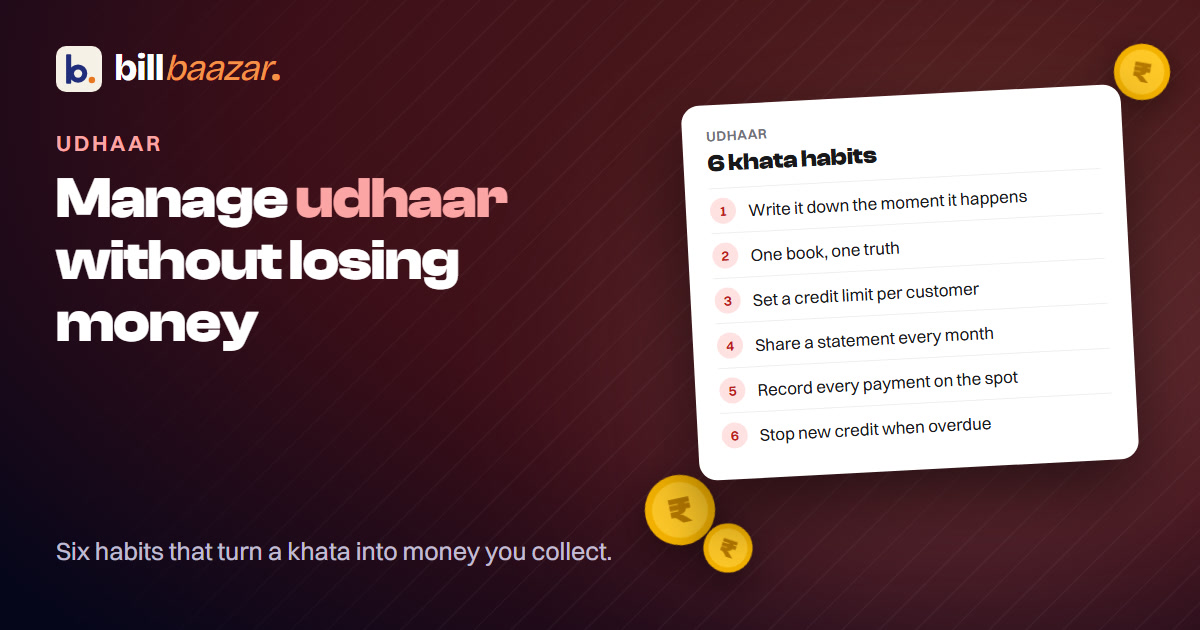
Udhaar is the backbone of a lot of small businesses in India. Households take milk daily and settle monthly. A tea stall runs a tab through the week. It works because of trust. But trust alone does not balance your books, and khata is exactly where dairies lose the most money.
Here is the uncomfortable part: most of what you lose is not stolen. It is lost to disagreement — two people remembering the same month differently, with no record either of them fully believes.
Write it down the moment it happens
The single biggest cause of lost udhaar is a sale nobody recorded. It is 7am, three people are waiting, the delivery boy is asking about the round, and you tell yourself you will note it after. You will not.
Whatever system you use, it has to be fast enough to use during the sale, not after it. If recording a sale takes longer than making it, you will skip it — and the skipped ones are always the ones that get argued about.
Record the rate, not just the amount
Milk rates change. When they do, a khata that only shows totals becomes impossible to defend. "Why is this month more than last month?" is a fair question, and "the rate went up" is not a satisfying answer without the arithmetic behind it.
Keep the quantity and the rate for every day. Then a rate change explains itself.
Give them a statement they can check themselves
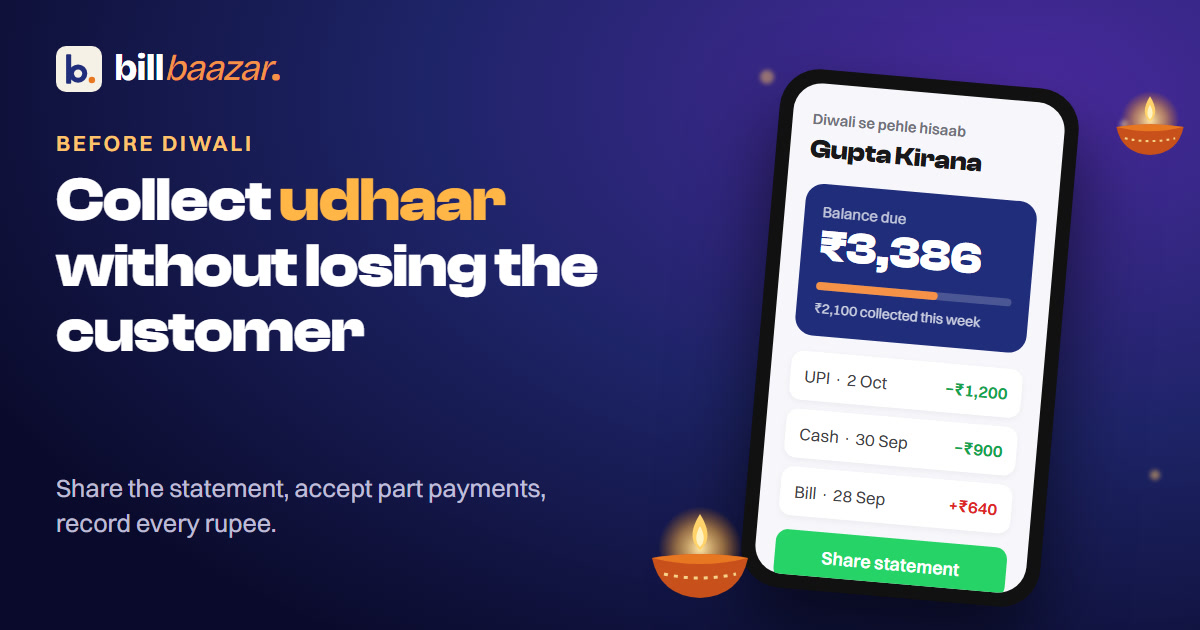
This is the one that changes collection speed most. A total at the bottom of a page invites an argument. A statement that lists every date, every litre, every rate and every payment ends one before it starts.
Customers who can verify the number pay sooner. Not because they were dishonest, but because they no longer have to take your word for it.
Set a limit before you need one
Decide, per customer, how much credit is acceptable — and decide it when you are calm, not when the balance has already grown uncomfortable. A limit you set in advance is a policy. A limit you set afterwards is an accusation.
Ask early and ask in writing
A gentle message on the 3rd is easier for both of you than a hard conversation on the 20th. Sending the statement itself is the reminder — you are not asking for money, you are sharing a record. That difference matters in a small neighbourhood where you will see this person every morning.
Know your numbers weekly, not monthly
If you only look at the khata at month end, you find out about a problem four weeks after it started. A quick weekly look at who owes the most, and who has not paid in two months, catches it while it is still small.
Where software helps, and where it does not
Software does not make anyone pay. What it does is remove the two failure points above: it records the sale in the moment, and it produces a statement the customer can check. Everything else — the limit, the early ask, the weekly look — is a habit, and no tool will build it for you.
If you want to see what that statement looks like, here is how the BillBaazar khata works, or try it free for 15 days.
Try BillBaazar in your shop
Free for 15 days, no card needed. We'll move your customer list across for you.
Keep reading
Ready to close the notebook?
Set up your shop in ten minutes. Free for 15 days, no card, and we'll move your customer list across for you.