Diwali Stock Checklist for Kirana and Sweet Shops
Diwali falls on 8 November this year, three weeks later than usual. Here is what to stock, when to order it, and how to avoid being left with boxes nobody wants.
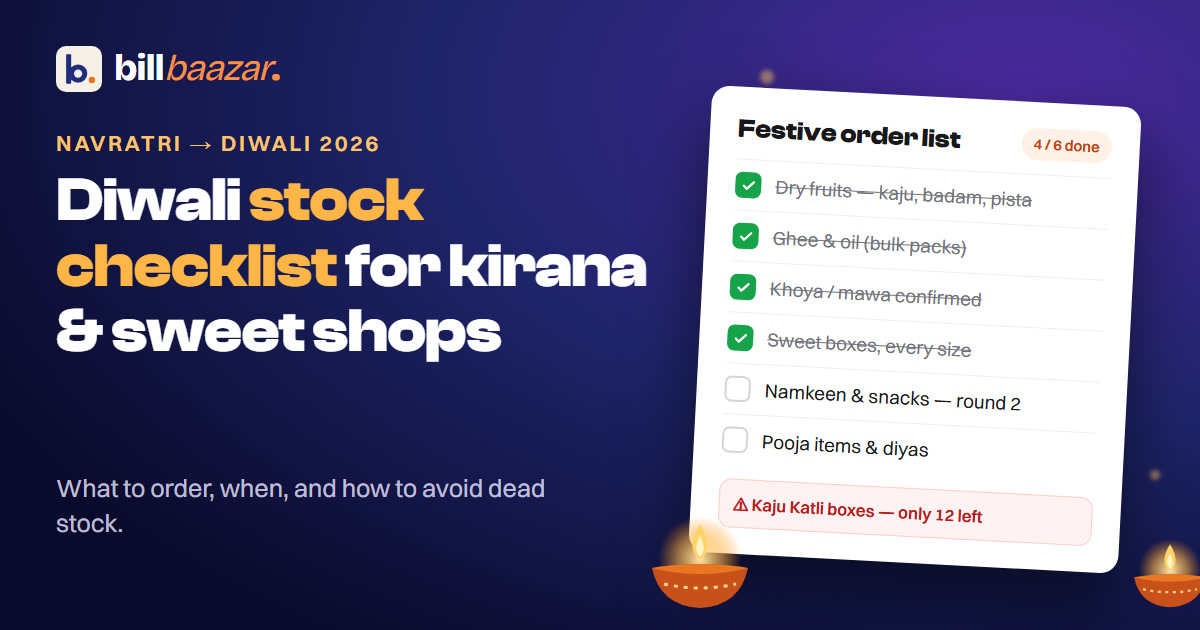
Diwali falls on Sunday, 8 November 2026 this year — about three weeks later than last year, because of the adhik maas in the calendar. Navratri begins on 11 October, and from there it is one long run of buying occasions: Dussehra, Karwa Chauth, Dhanteras, Diwali, Bestu Varas and Bhai Dooj. A good Diwali stock checklist is what keeps you ahead of all of them.
For kirana shops and sweet shops, these few weeks can bring in a quarter or more of the year's sales. They can also leave you with a storeroom full of gift boxes in December. This Diwali stock checklist is about getting the first without the second.
Why a Diwali stock checklist matters more this year
A later Diwali changes the timing of everything. Suppliers get their busy season later, prices on dry fruit and ghee tend to rise as the date gets closer, and customers start buying in bursts around each festival rather than all at once.
The shops that do best are not the ones that buy the most. They are the ones that buy the right things at the right time — and know their numbers well enough to stop ordering before they overstock.
Step 1: Look at what actually sold last Diwali
Before you order anything, look back. Last year's festive sales are the best predictor you have.
Which items sold out? Which sat on the shelf? Which sold steadily all month, and which sold only in the last three days?
If your sales are on paper, this is guesswork. If you have last year's bills in a billing app, you can pull a report of top-selling items for October and November in a minute and order from real numbers. It is the single most useful thing you can do before placing a festive order.
The Diwali stock checklist for kirana shops
Order early (by mid-October):
- Dry fruits — kaju, badam, kishmish, akhrot, pista, both loose and packed
- Ghee, oil and refined oil in larger packs
- Sugar, besan, maida and suji — sweet-making at home spikes
- Dry fruit and chocolate gift packs, if your customers buy them
Order in two rounds (early October and again before Dhanteras):
- Namkeen, biscuits and packaged snacks
- Cold drinks and juices for guests
- Pooja items — diyas, agarbatti, camphor, cotton wicks, kalava
- Cleaning supplies — Diwali cleaning starts two to three weeks before the festival
Keep lean, reorder fast:
- Items with a short shelf life or that you only sell in the final week
- Branded gift boxes you have not sold before — test with a small order first
The Diwali stock checklist for sweet shops
Sweet shops face a harder problem: most of what they sell is made from perishable raw materials, and demand is concentrated in a few days.
Raw materials to secure early:
- Khoya/mawa — confirm your supplier and quantity well in advance; it is the first thing to run short
- Ghee in bulk
- Dry fruit for kaju katli, barfi and garnishing
- Sugar, besan and flour
- Silver varq, cardamom and saffron
Packaging — often forgotten, always needed:
- Sweet boxes in every size you sell, plus extras
- Gift boxes and bags for corporate and family orders
- Butter paper, stickers and ribbon
Plan bulk orders separately: Corporate orders and large family orders can take a big share of your festive sales. Take them in advance with a delivery date and an advance payment, so you know exactly how much to prepare. If you keep these as pre-orders rather than on paper slips, you will not miss one in the rush.
For more on running a sweet shop's billing during the busy season, see our page on billing software for sweets shops.
Step 2: Set a low-stock alert for your top items
The worst Diwali loss is not dead stock. It is running out of your fastest-selling item on Dhanteras evening and watching customers walk out.
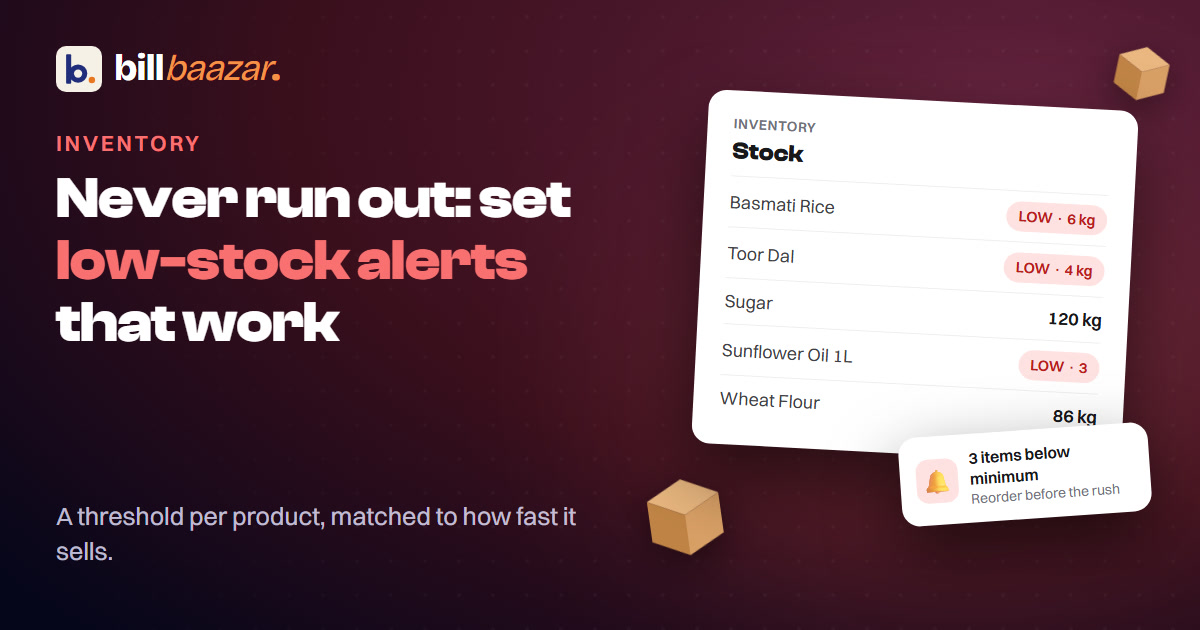
For your top ten or twenty items, decide a minimum level — the quantity at which you must reorder. When stock falls to that level, it is time to call the supplier, not when the shelf is empty.
We wrote a full guide on setting low-stock alerts that actually work. During Diwali, raise those minimums, because items sell three or four times faster than usual and a normal reorder level will be too late.
Step 3: Track stock as you sell, not at the end of the day
In a normal week, counting stock at the end of the day is manageable. During Diwali, it is impossible — the shop is full from morning to night.
The only reliable way to know what is left is to have stock go down automatically with every bill. Then at any moment you can see what is running low, without counting a single shelf. This is what inventory management software is really for — not reports, but knowing your stock during the rush.
Step 4: Plan for the week after Diwali
Demand drops sharply after Bhai Dooj. Anything you are still holding then will sell slowly, if at all.
- Stop reordering seasonal items around Dhanteras. Sell through what you have.
- Combine slow items into offers in the last few days before Diwali, rather than being left with them afterwards.
- Note what was left over. It is next year's most valuable lesson.
Step 5: Keep your billing ready for the rush
The final piece is the counter itself. During Diwali, a slow billing process means a queue, and a queue means customers who leave.
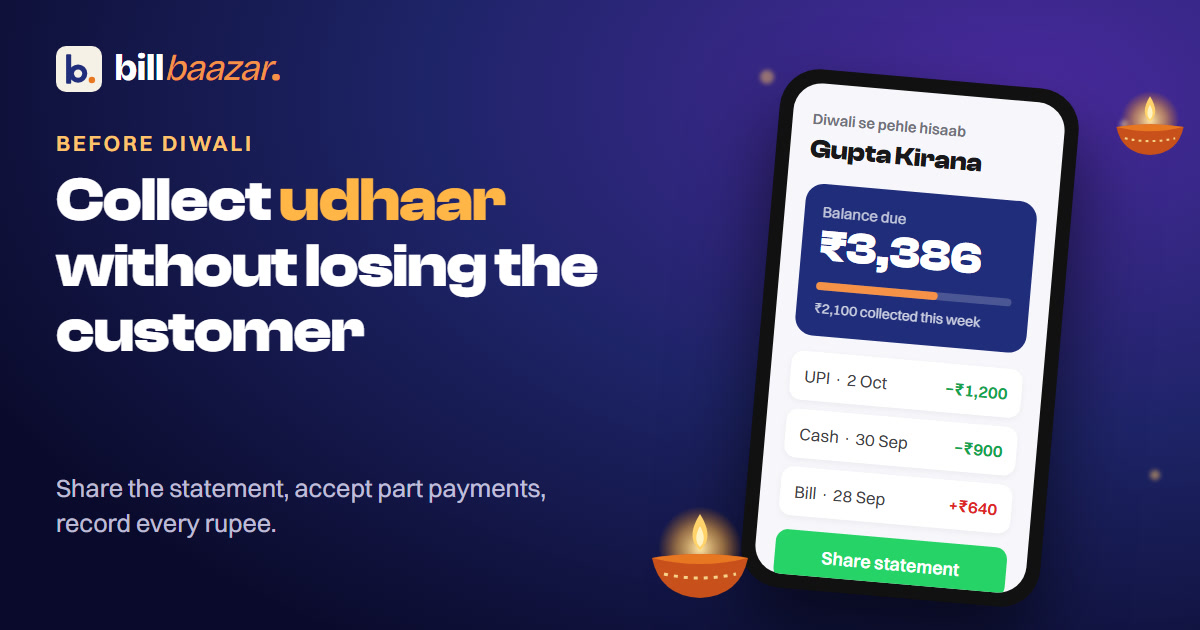
Make sure your billing is quick, your printer has paper and your UPI QR code is visible. And keep credit sales recorded properly — festive udhaar that is not written down is the hardest money of the year to collect. Our guide on collecting pending udhaar before Diwali covers that side of the season.
A calm Diwali starts in October
Most festive stock problems — the empty shelf, the pile of unsold boxes, the supplier you called too late — come from the same place: not knowing your numbers during the busiest weeks of the year.
Start with last year's sales, order in rounds, set alerts for your top items, and let stock update itself with every sale. You will spend less time counting and more time serving the customers who are actually in the shop.
If you want to see stock that updates with every bill, here is how BillBaazar handles it for grocery shops. It is free for 15 days, so you can try it through the festive season.
Try BillBaazar in your shop
Free for 15 days, no card needed. We'll move your customer list across for you.
Keep reading
Ready to close the notebook?
Set up your shop in ten minutes. Free for 15 days, no card, and we'll move your customer list across for you.