HSN Codes and GST Rates for Kirana and Grocery Items, Explained
Why the same grocery bill can have five different GST rates, and how to set it up once per product instead of guessing at the counter.
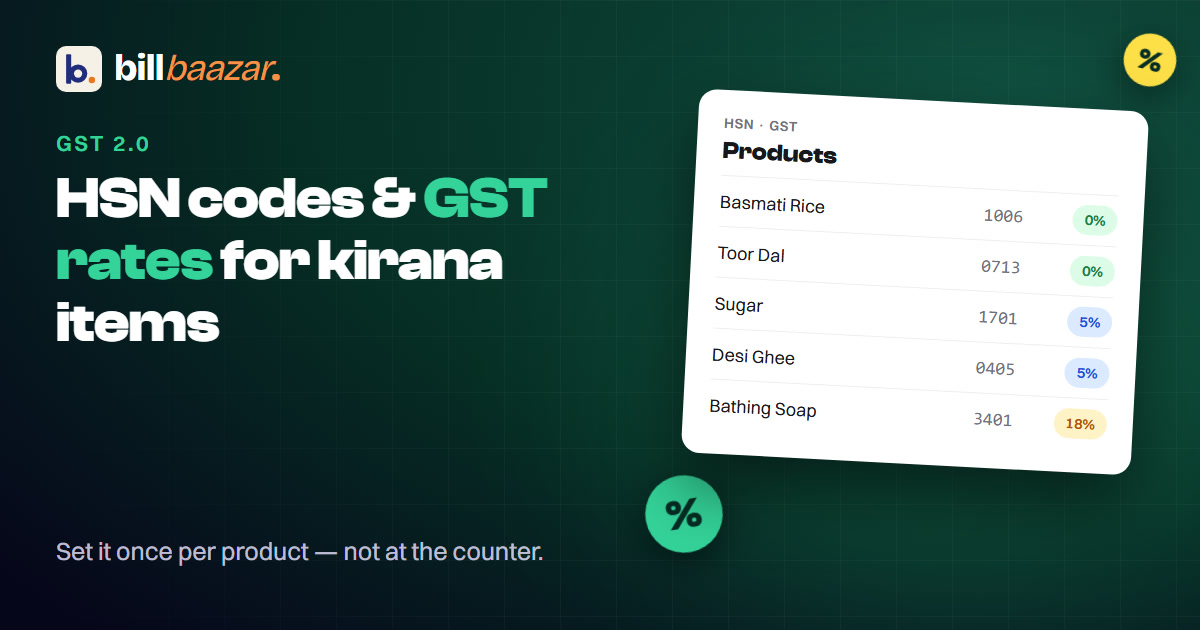
A kirana shop's shelf is the messiest GST puzzle in retail — one bill can span a 0% staple, a 5% packaged snack and an 18% cold drink. Getting it right isn't complicated once you know where the confusion actually comes from.
Why the same shop has different rates on the same bill
GST is charged by HSN (Harmonized System of Nomenclature) code, not by "grocery" as a category. A few examples that trip people up:
- Loose grains, pulses and fresh vegetables are typically GST-exempt (0%).
- Branded, packaged versions of the same staples — a sealed bag of branded rice — are usually taxable, often at 5%.
- Packaged snacks, biscuits and namkeen generally sit at 5% or 12% depending on the exact product.
- Soft drinks and many processed items can run as high as 18% or more.
The rule of thumb: loose and unbranded usually means exempt; branded and packaged usually means taxed. But "usually" is doing a lot of work in that sentence — the actual rate depends on the specific HSN code, and it changes when rates are revised.
Set it once, per product
The mistake to avoid is deciding the tax rate at billing time, item by item, from memory. That's how a shop ends up undercharging on one bill and overcharging on the next for the exact same item. The fix is boring on purpose: set the HSN code and GST rate on the product record once, and let every bill after that apply it automatically.
What to check with your accountant
- Whether your total turnover crosses the GST registration threshold in the first place.
- Which of your specific SKUs have had a rate change recently — revisions happen and don't always make the news the way a headline change does.
- Whether you should be composition-scheme registered, which changes how you bill altogether.
None of this is billing-software advice — it's genuinely worth five minutes with whoever files your returns.
Making the bill match the shelf
Once rates are set per product, a kirana bill with ten items at five different rates should be no harder to generate than a bill with one item. That's the actual test of whether your billing setup is working: can you sell a customer a mixed basket without doing tax arithmetic in your head at the counter.
See how BillBaazar handles GST billing for grocery and kirana shops, or read the grocery & kirana billing page for the rest of what's built for a shop like yours.
Try BillBaazar in your shop
Free for 15 days, no card needed. We'll move your customer list across for you.
Keep reading
Ready to close the notebook?
Set up your shop in ten minutes. Free for 15 days, no card, and we'll move your customer list across for you.