E-way Bill 2.0 Guide: Navigating the New 2026 Closure and Ship-to Rules
Logistics for small factories just got a major update. From mandatory "Ship-to" designations to the new voluntary digital closure facility, here is how to keep your goods moving safely under the 2026 E-way bill rules.
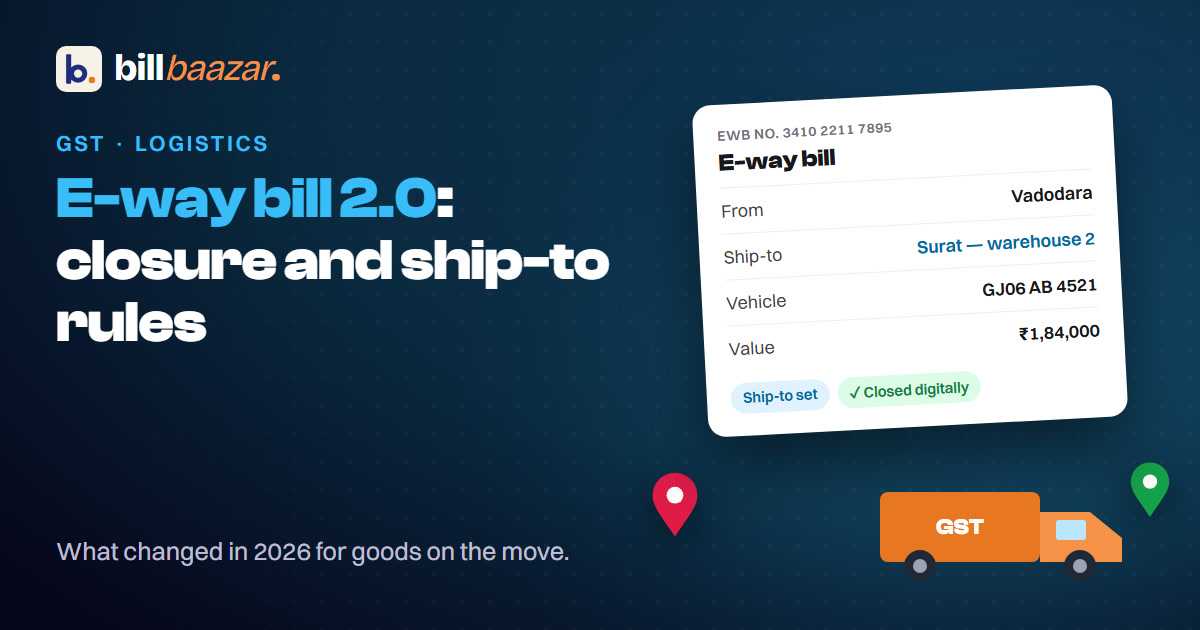
The Shift to E-way Bill 2.0 in 2026
Logistics transparency is the goal of the latest GSTN updates. For industrial units moving high-value goods, compliance in transit is now just as critical as the invoice itself.
1. Mandatory Ship-to GSTIN Validation
In Bill-to/Ship-to transactions, the GSTIN of the actual recipient is now a mandatory field. Our billing software handles this automatically, ensuring you don't face validation failures. For unregistered consignees, remember to use the "URP" designation to keep your shipments moving.
2. Using the Voluntary Closure Facility
One of the biggest 2026 updates is the ability to formally "close" an E-way bill once delivery is successful. While currently voluntary, closure provides a definitive digital record of delivery, reducing the risk of audit disputes and preventing the misuse of active EWBs for undocumented movements.
3. Real-time Integration with ULIP and FASTag
The E-way bill system is now more integrated with FASTag data. This means tax officers can cross-verify vehicle routes and delivery status in real-time. Industrial MSMEs must ensure their vehicle details and transporter IDs are 100% accurate before the truck leaves the factory gate.
4. How MSMEs Can Prepare
Update your ERP or billing platform to support the new 2026 API fields. Automating your E-way bill generation directly from your invoice not only saves time but eliminates the manual entry errors that often lead to roadside penalties.
Try BillBaazar in your shop
Free for 15 days, no card needed. We'll move your customer list across for you.
Keep reading
Ready to close the notebook?
Set up your shop in ten minutes. Free for 15 days, no card, and we'll move your customer list across for you.